

Chasing Flow · Issue 06 · 10 November 2026
What your business knows, and whether anyone else could find it.
Chasing Flow is written for owners of $5M to $50M companies that win work through a quote or a proposal, and whose business runs through them more than they’d like. Making the business worth more and less dependent on its owner is work that never quite ends, and each issue takes on one piece of it.
Hence the name: Chasing Flow.

Headwaters — the streams at the source of a river, where it begins. Just as the headwaters set the course a river takes, this section states the one idea running through the issue.
It runs on you
A lot of what your business runs on isn’t written down, like which work is worth quoting and what the hard jobs should be priced at. That isn’t a failure of management. It’s what happens when somebody turns out to be good at something.
This issue looks at six places it shows up:
- The limit in your product that you’ve never put in writing.
- Which quotes shouldn’t get engineering time.
- How much of your recent work you’d already done before.
- Who besides you couldn’t be away for two weeks.
- How few people outside the company bring you work.
- The commercial role a buyer would hire for after buying your company.
Not much of it shows up as a cost while the person holding it is there and the market stays steady. Then somebody retires, or whoever brings you the work takes it elsewhere, or somebody wants the history behind a number in a form you can’t produce. In my experience what a buyer can’t see is what a buyer discounts. The judgment isn’t written down. The records behind it usually are. Pulling an answer out of those was never the hard part for me. Getting somebody else to the same answer always has been.
In this issue
- 01 · Brand & DemandWhen I set up the customer evaluation process at an instrument company, what surprised me was how fast the edges showed up.
- 02 · Pipeline VelocityI previously wrote that somebody in an engineering-led company has to be able to decline an RFQ.
- 03 · Total Relevant MarketWhen I’ve worked on commercial diligence for engineered-product companies, I’ve learned not to put much weight on revenue growth on its own.
- 04 · It runs on youOwner dependence doesn’t always sit with the owner.
- 05 · Pipeline VelocityYou can be concentrated in a few customers even when the revenue split doesn’t look that way.
- 06 · Leadership & ManagementMason Wells, a buyout firm, bought Calvary Industries in August 2025, a specialty chemical business the Morelock family had owned since 1983.

The current — the body of water in steady motion, and what’s moving through it now. Just as the current carries the volume of a river, this section carries the substance of the issue — the working ideas, in full.
Sales Beyond the Owner · Runs Without You
When I set up the customer evaluation process at an instrument company, what surprised me was how fast the edges showed up.
We’d put a unit in somebody’s lab, and inside a couple of weeks they’d found every edge that mattered to the work they were doing.
So a question worth asking about your own material. Where do you say what your product doesn’t do? Not the operating limits, if you publish those. I mean the competitive limit, the thing a rival does that you don’t.
Most teams I talk to don’t have that sentence anywhere, and the reason they give is that the evaluation will surface it if it matters. In a head-to-head bake-off, it will. But most of the evaluations I’ve watched answered one question, which was whether the thing worked for the job in front of them. That isn’t the same question as how it compares, and a competitive limit doesn’t surface in a test with no competitor in it.
So it lands later, and from somebody else. A rival asks whether they thought to check. Phase two needs the thing phase one didn’t. Either way a limit you could have framed yourself shows up as a limit you left out.
Take an integration claim. Two vendors both say their product connects to your ERP. One of them writes orders straight into it. The other produces a file that something on your side has to pick up and load. Same sentence on both websites, and the difference is somebody’s whole Tuesday.
If yours is the second one, the vague version buys you meetings with people who need the first one. Describing it precisely costs you those meetings and keeps the ones you can win. That trade is the actual decision, and in the companies I’ve worked in it gets made by default, in the direction of more meetings.
The fair objection is that a published limit gets you screened out on paper by a buyer who’d have stayed on the call, and that does happen. It argues for putting the limit where a person reads it and can ask you about it, not for leaving it out.
Naming the limit on its own isn’t the whole move either. A limit stated bare leaves the buyer to size it, and in my experience they size it bigger than it is. Say what it costs them and what you’re doing about it in the same breath.
"Limited ERP support" tells a buyer much less than they need and reads like hedging. "We write orders and receipts, we don’t touch pricing, and pricing is next on the integration roadmap" tells them what their week looks like.
This works best when you already know what the limit costs the customer. If you don’t know that yet, saying you’d want to run an evaluation first is a reasonable answer too.
Numbers That Hold Up · Operating Rhythm
I previously wrote that somebody in an engineering-led company has to be able to decline an RFQ.
Easy to agree with, harder to act on, because you still have to work out which RFQs belong in that pile.
Same file as that post, different column. That one had you pull last quarter’s quotes and log when each request arrived, when it went out, and who held it in between.
This time, mark the ones that needed engineering to produce. A drawing, a calculation, an application review. Not a price off a list. Then mark which of those turned into an order.
Now take the engineering quotes with no order against them and group those two ways. By account, and by application.
One account that keeps asking and rarely orders is a qualification conversation. It might be friendly, if someone there likes you enough to keep calling. It might also be that they need three bids and you’re the third, or that you’re the number they check the incumbent against. Those look identical from your side, and they don’t call for the same posture.
A class of application you keep quoting and rarely winning is a different problem. Either you aren’t competitive in it, or you’re arriving after someone else shaped it.
Be careful with the number. A quote with no order against it isn’t a loss. Some are still open, some died with the customer’s project. So it isn’t a win rate, and I’d resist turning it into one.
An engineering-heavy quote that goes nowhere costs more than a simple one, and that difference usually isn’t something you can sort on. So the place where losing is most expensive is the place your own records are quietest about.
Check where engineering time gets booked. If it goes against jobs, you’re capturing work that turned into an order, and quoting time is the gap. Hours that went into a quote nobody ordered sit in an overhead bucket, or nowhere.
Two fields on the quote record close that. One for whether engineering touched the quote, one for a rough estimate of the hours from whoever did it. Rough is fine, because you’re comparing across a quarter rather than billing anybody.
Then you can write the rule down. It won’t be a hit-rate cutoff, and I’d distrust anyone who hands you one, because the break sits wherever your own numbers put it.
In practice it’s a default and an exception. Requests from the accounts eating hours without producing orders get a ballpark from the seller and no engineering time. Going past that takes approval from one named person, and it should be whoever can see the hours.
That holds up when a seller argues for the exception, because you aren’t debating your opinion of the account. You’re both looking at what it has cost you and what it has bought. Without the hours behind it, the rule is an opinion, and it won’t survive the first big name that asks.
Numbers That Hold Up · Getting Ready to Sell
When I’ve worked on commercial diligence for engineered-product companies, I’ve learned not to put much weight on revenue growth on its own.
Here’s a version of what it can hide. A company reports a strong year, orders are up, the backlog is healthy and the pipeline looks full. Then you look at what shipped, and the last twenty orders were twenty different applications, each one engineered from the start.
That’s a project business getting bigger. The cost of the next twenty orders will look a lot like the cost of the last twenty.
So before you fund more engineers or more sellers, there’s a question worth putting to the management team. How much of each recent order did they already have on the shelf?
Take the last twenty orders and work through them one at a time. For each, how much came off an existing drawing, an existing configuration, an existing bill of materials. How much was new engineering. You don’t need precision. Most of it, some of it, or almost none of it is enough to work with.
The count of applications isn’t the problem on its own. A genuinely horizontal part can ship into twenty industries off one design, and that’s a good business. What matters is how much of the work repeated.
Whether you can already see this depends on how the company treats design work. If it bills engineering as its own line, or charges hours to each job, the mix is in your reporting and you can skip the exercise. Many of the companies I’ve looked at absorb that work into unit price, or carry it as a department cost. Then nothing in the revenue line tells you which orders were new.
If most of it repeated, the design work is done and paid for, so the plan can reasonably assume fewer engineering hours per order from here. That’s engineering hours, though, not unit cost. Unit cost comes down through purchasing, tooling and time on the line, and reusing a drawing delivers none of those by itself.
If almost none of it repeated, look at what the model says margin does over the plan period. An improving line has to have a cause, and reuse was probably the unstated one.
Most companies land in the middle. Two follow-ups are worth asking in the same meeting.
Which customers or applications produced more than one order, because those are the beginnings of a segment. And what the team would have to turn down for the repeat work to grow faster than the custom work.
That second one is the real test. A company that can’t name what it would decline hasn’t defined its segment clearly, or the ideal customer inside it, and the plan you underwrote probably assumed both.
Runs Without You · Second Layer
Owner dependence doesn’t always sit with the owner.
Sometimes the person the business can’t do without is an employee, and in diligence that goes on the same list.
Think about a two-week, work-free vacation with your family. Not every owner can, and if you can, you’ve already done something right. You can hand off your known items and you’re fairly confident the place will keep running. Then ask who else can’t be away or sick during those two weeks. That’s the list that matters.
Easier to see by function. In a machine shop it’s whoever prices the tough jobs. In field service it’s the manager who knows which plants call at 2am and what they’ll settle for. One decides whether you win work, the other whether you keep customers, and a buyer checks both.
So ask function by function. Who holds the relationships? Who makes the calls on price and risk? And does any of it exist outside their head?
Somebody doing important work isn’t a dependence. Somebody doing important work that no one else knows how to pick up is.
Dependence on people doesn’t mean you did anything wrong. Someone turned out to be good at something, it worked, and more of it went to them.
What’s hard to pick up is the judgment, and two things get it out of one person’s head. Writing it down is only one of them.
You still want the procedure written. A typical one stops at the steps, but you also want to capture how they decide. What makes it risky, what they’d add for it, and where it stops being worth winning.
Then have someone else make the call, with the first person checking rather than deciding. The document gets them started, and a dozen jobs with a correction each time does the rest. And if there’s nobody to hand it to, that’s a hiring decision before it’s a documentation one.
One caution, though. The decision transfers fairly quickly, but the relationship takes longer. If a plant manager has called the same person for nine years, a written process doesn’t move that call.
Two ways at that, and they do different things.
The first is to get more of your team in front of the customer. One designated replacement is one point of failure again. Give two or three people a real piece of it, one on the schedule, one on quality, one on the renewal. Now the customer has more than one number to call, and more than one of you knows the account.
The second doesn’t spread it, it moves it. Put the work under a service or supply agreement with a scope, a term and a renewal date. The customer is then committed to your company rather than a person, and the next conversation starts from the document.
Either way it’s easiest while the customer is satisfied, because that’s when they’re most open to a change.
Customer Concentration
You can be concentrated in a few customers even when the revenue split doesn’t look that way.
The list that matters is who decides you get the work, and it can be a lot shorter than the list of who pays you.
Sometimes they’re the same party and it shows on your receivables, like a contractor working for three general contractors.
A manufacturer selling through reps is harder to see. Your invoices show a spread of end customers, so nothing looks concentrated. But you’re in those accounts because of the rep. In my experience that’s one person with their own relationships rather than a firm with a territory. If they retire or take on a rival’s line, those accounts may not follow you.
An equipment dealer has a different version. A hundred parts and service accounts pay the bills, but one manufacturer’s line is most of the revenue. Your dealer agreement with that manufacturer decides whether you’re allowed to sell the thing those accounts are buying. Read yours for the termination clause, the notice period, and whether they can appoint somebody else in your territory. Some states limit what that agreement can do, so the clause isn’t always the last word.
To check your concentration, group last year’s revenue by who paid you. Then group it by who brought you the work, and look at where the two don’t match.
If you have trouble splitting the revenue by who brought it in, that’s a finding in itself. The route your revenue arrives through isn’t written down anywhere, and the fix is to start capturing it on every sale.
Then ask what’s on paper for each route. One with no contract and a long history is the uncomfortable case. It has worked for years and nothing says it has to.
A concentrated route isn’t evidence of a badly run business. The problem is that there’s only one of them.
Two remedies, and the first is easy to overlook. Put the existing route on paper, with a term and notice period.
The second is a second route of the same kind, into the same customers. If a rep is the route into key accounts, add another rep with their own relationships there and let them prove it. For a dealer it’s a complementary manufacturer, a different category, or service and aftermarket revenue that doesn’t sit under the OEM agreement.
Do it in the open, and settle account ownership, exclusivity and commission rules before you start. If the territory is exclusive, the openings are a renewal, a split territory, or a different line inside the same one. Quietly competing with the partner who got you there trades one problem for another.
It will be small for a long time. You’ll know it’s working when the new route brings in work the first one didn’t.
Second Layer · Getting Ready to Sell
What a buyer goes out and hires after they buy a company like yours
Mason Wells, a buyout firm, bought Calvary Industries in August 2025, a specialty chemical business the Morelock family had owned since 1983. Inside the next year Calvary announced two senior appointments, a CFO and a VP of sales and marketing. Both arrived from other companies, and the CFO came through a national search. Both announcements are Mason Wells’ own. To be fair, neither company announcement says those roles were new, or that nobody inside could have done the job.
However, when I see key new hires in the first year after an acquisition, it signals to me that the buyer knew about a weakness at the time. And in my experience that weakness translates to a lower offer price or other commercial concessions.
If someone expressed interest in buying your company, which roles would you expect them to fill first?
Finance should be the easy one to identify. You know whether your books take weeks to close or hours. The commercial side is usually harder to identify, and frequently is intertwined heavily with the owner.
Maybe you do have strong commercial systems in place. Pricing runs on a written basis, approvals don’t route through you, and somebody else runs the account reviews and keeps the notes. If that is in place, the rest of this isn’t for you.
If you don’t, I’d expect a buyer to discount for it, either by lowering the offer or by putting more of the money at risk in an earnout.
It’s tempting to name one person as the successor and call it done. That rebuilds the same problem with a different name on it, and so does naming three, if each is the only one who can do their piece. Three things have to come out of your head. Pricing and who can approve it, how your largest accounts are handled when something goes wrong, and what type of deals you turn down.
You can start without hiring anybody. Write down how you price, and turn your judgment into an approval rule, a size threshold for instance, or a new customer triggering a second signature. Put your biggest accounts on a standing review that somebody else runs and documents. Make sure you have clear rules around what business you walk away from and why so the outliers have logic that can be easily applied. Those are starting pieces of a bigger job, a commercial operation that makes revenue predictable whoever’s running it. Building it takes time, and it can start without creating any new roles.
You can expand someone’s role or hire externally depending on your team’s capacity, but wait until it’s clear what role is needed.
All of this can be written down in a week. Proving it works takes longer than a sale process usually leaves you, so start now.

Tributary — a stream that rises elsewhere and joins the main channel. Just as a tributary adds to a river’s flow, this section takes outside research and asks what changes for a company that wins work by quote or proposal.
It runs on you
Four questions for the people around an owner
On the Exit Planning Institute’s blog, Rob DiFranco sets out EPI’s Family Alignment Framework, an extension of its Three Legs of the Stool: business, personal and financial. The case is that a transition changes who leads or owns a company, and with it what family, employees and business partners expect. EPI describes the work as ongoing rather than a one-time event before an exit, and applying even when the business isn’t going to family. The post gives four headings, each with a question, and says the whitepaper works them out. Family, how do we prepare our relationships for the future. Ownership, what responsibilities should come with ownership. Leadership, who is prepared to lead the next chapter. Governance, how will we make decisions together, and who will join us in making those decisions. It tells advisors to download the whitepaper and start these conversations with clients. EPI’s president, Scott Snider, is quoted saying Family Alignment "isn’t built in a single conversation, and it certainly isn’t built in a single generation."
Two of the four set me thinking about my own corner of this. What follows is mine, and it sits beside their framework rather than inside it.
Leadership asks who is prepared to lead the next chapter. For a business that wins work by quote or proposal, what I’d want written down is who can commit to a price and a date without you, and to a scope if you sell one.
Governance asks how decisions get made and who joins in making them. I’d write down what size of discount or concession needs a second signature, and, depending on what you sell, who approves engineering hours on a quote, who signs a change order, or who negotiates the line or the territory with the manufacturer.
In the companies I’ve worked in, the authority sat in somebody’s head while the evidence sat wherever the company tracked jobs, hours and service calls. Those answers aren’t a substitute for anything in the piece. They’re what I look for first, and in my experience a buyer ends up asking for them too.
Source: "How to Build Business and Family Relationships that Fuel a Significant Exit", Rob DiFranco, Exit Planning Institute, 29 October 2026.

Downstream — the direction the water is already traveling. Just as a river carries everything downstream, this section points at the one thing worth doing before the next issue lands.
If you do one thing before the next issue, take your functions one at a time and write down who holds the relationships and who makes the calls on price and risk. Then look for a name that shows up in more than one function. That’s not proof of a problem, but it’s where I’d look first.
Why this runs on a system
In my experience the goal often gets described as the plan. Grow 30 percent. Rebuild the pipeline. Get the backlog up. Those are outcomes, and naming one doesn’t tell you whether the processes and the investment behind it can produce it.
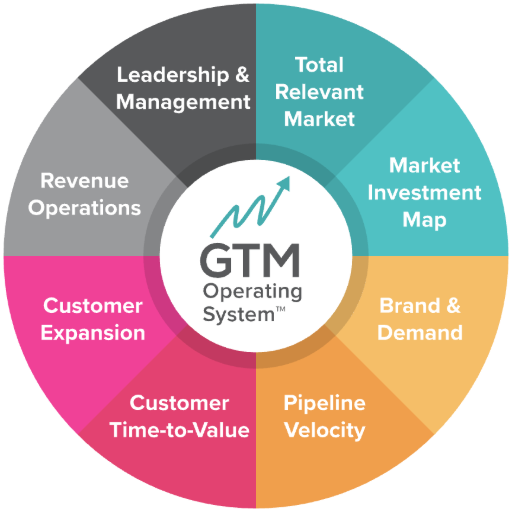
The method behind this work is the GTM Operating System, from GTM Partners. It covers eight areas in sequence: where the growth actually is and which products earn it, how customers hear what you do and which motions reach them, what happens after they buy and whether they buy again, and the numbers and the leadership rhythm that keep the rest honest. Each area builds on the one before, so the one that binds moves the ones that follow.
For an owner the point of that is narrower than growth. It’s revenue that doesn’t run through one person, numbers that survive a buyer’s questions, and a business worth more because it needs you less.
Want to know which of those is holding yours back? Book a free 60-minute conversation.
You may not get to choose when you step back. A buyer calls, a partner quits, the market turns. Getting ready lowers the risk and hands you your time back.
Worth more. Needs you less.
Start at mhflow.co – or forward this to the operator who needs it.
Get the next issue on LinkedIn. Chasing Flow publishes every other Tuesday. Subscribe on LinkedIn.
Working through one of these in your own business? See how Flow works with companies.
Chasing Flow is written by Michele Hodde. GTM OS and the eight-pillar operating system are trademarks of GTM Partners, licensed to Michele Hodde as a certified practitioner.