

Chasing Flow · Issue 05 · 27 October 2026
Six conclusions worth testing against records you already have.
Chasing Flow is written for owners of $5M to $50M companies that win work through a quote or a proposal, and whose business runs through them more than they'd like. Making the business worth more and less dependent on its owner is work that never quite ends, and each issue takes on one piece of it.
Hence the name. Flow is real and it’s achievable, and it doesn’t hold still: competitors move, the market moves, your own product mix moves, and the alignment that produced flow last year quietly stops producing it. So the pursuit is the permanent condition, not a project with an end date. Every other week this newsletter gives you ways to evaluate where your GTM is actually breaking and what to do about it — practical diagnostics, the numbers behind them, and a path back toward flow.

Headwaters — the streams at the source of a river, where it begins. Just as the headwaters set the course a river takes, this section states the one idea running through the issue.
Every post in this issue starts from a conclusion that already sounds right.
The product is missing a feature, because the rep who lost the deal said so. Quotes are late because engineering is short-handed. Leads aren’t converting, so the answer is a marketing hire. The distributor relationship is solid, because the orders keep coming. The show will create demand, because the booth is paid for. The customer will sign, because they said the technology is impressive.
Each of those is plausible and some of them are right. What they have in common is that none of them has been checked, and in most cases the record that would check it is already in the building. Quote dates sit on the documents. Won and lost deals in one application sit in your own records. The application engineering you put into deals that shipped through a distributor sits in somebody’s time entries, and nobody has added it up.
Holding a view like that is free. Funding one takes a quarter of engineering capacity, or a hire, or a line on next year’s plan. And whatever was actually wrong is still wrong when the money is gone.
In this issue
- 01 · Distributors and RepsThree distribution deals announced in September and October 2026.
- 02 · Fractional vs Full-TimeWhat separates a fractional CMO from a full-time one is what reopens the strategy question in your business.
- 03 · Product LaunchIf you’re launching a product at a trade show, four things are worth deciding before you fly out.
- 04 · Getting SpecifiedEvery new B2B product I’ve launched has hit the same wall on the way to early traction: providing evidence that addresses buyer risk.
- 05 · Target CustomersI can’t count the number of times a sales rep has told me "we lose because our product doesn’t have X" as a settled conclusion.
- 06 · Operating RhythmIn my experience, engineering-led companies run most quotes through engineering.

The current — the body of water in steady motion, and what’s moving through it now. Just as the current carries the volume of a river, this section carries the substance of the issue — the working ideas, in full.
Distributors and Reps · Revenue Metrics
Three distribution deals announced in September and October 2026.
Rexel agreed to buy GCG, a specialty wire and cable platform with more than 60% of its revenue tied to segments including data centers and grid modernization. TD SYNNEX moved on BlueStar, which distributes automatic identification, operational technology and robotics. Incline Equity bought The Conrad Company, a fluid power and motion control distributor with five locations, and Conrad’s CEO, Seth Bray, said the deal would let it invest in its sales and technical staff.
Those details come from the companies’ own announcements, so read them accordingly. The count is firmer. PMCF Investment Banking counted 70 US distribution deals in the second quarter of 2026, up 7.7% year over year. One firm’s dataset, but the direction matches what’s been announced since.
If you sell through distribution, one of your channels is in that pattern or is going to be.
Ask anyone who has been through an ownership change on the distributor side what happened to the line card afterwards. A new owner arrives with a thesis, usually some version of margin and category focus, and lines get kept or cut on what they contribute.
The awkward part is that the assessment runs on numbers sitting on their side of the wall. You know what you ship them and what you charge. You don’t know what they earn on your line, and you don’t know whether the accounts buying it have a qualified alternative.
One number is yours, and it’s the one that argues for you: how much application engineering you put into deals that shipped through them last year, and what share of it converted. That’s cost you carry so they don’t have to.
So ask for a joint review now, while you’re a supplier having a conversation. Bring that number. Ask for the two you don’t have.
That arithmetic is getting done. Nobody is going to ask you for your side of it first.
Fractional vs Full-Time
What separates a fractional CMO from a full-time one is what reopens the strategy question in your business.
Neither of these is your hire if the strategy question is settled. That means you’ve won in your segment, you can state the argument that won it, the only thing short is how many buyers have heard it, and nothing in development changes any of that. If that’s you, you need execution, and a VP of Marketing is the right seat.
Be careful about assuming you’re there. Sales wants more leads, which reads as a demand problem, but if the inquiries you already have aren’t converting, more won’t either, and the real question is which accounts you’re going after. You keep losing on price, which reads as a sales skills problem, but if your argument is one anyone in your category could make, price is the tiebreaker. Deals die at the same stage every time, which reads as a process problem, but a consistent stall says the way you sell doesn’t match how this market buys.
And a settled strategy doesn’t survive a change in the business. Strategy needs revising with each new product offering, each expansion into new regions, and each added channel partner, so if any of those is coming, the question is open no matter how good this year looks.
A fractional seat fits when the strategy question reopens on events. You launch something, enter a region, sign a partner, and the segment, the positioning and the motion all come back up.
How deep the help goes depends on who executes afterwards. If you have people who can run the plan while you stay out of the decisions, an advisor can settle the questions and hand them over. If you’d need to stay in those decisions, or you’re the only one who can make them, an advisor returns them to the person already holding them, which is you, and you don’t scale. The fractional seat is for that second case: someone who makes the calls and builds what carries them, hiring or training included, so the capability stays when the seat goes.
A full-time CMO fits when the strategy question reopens on a calendar. More than a few products, segments or routes to market, and which of them gets funded next is re-decided quarterly or semi-annually. That’s standing work. It needs someone in every leadership conversation with the authority to move money between them.
If that’s your business and you can’t staff a full-time CMO yet, the work is still standing work. A fractional seat holds it, makes the calls, and builds the function underneath. The trade-off is coverage, so the seat’s first job is ordering the work and starting where it moves revenue soonest.
If you can’t tell which one you’re in, the diagnosis comes first, because the answer decides which of the two you need. Hiring against the wrong answer is slow to show, and nothing gets fixed in the meantime.
If you have leads that don’t convert, deals lost on price, or deals dying at the same stage, message me and we’ll work out which one it actually is.
Product Launch · Target Customers
If you’re launching a product at a trade show, four things are worth deciding before you fly out.
The floor gives you short conversations and no time to think. Whatever you haven’t decided gets improvised by whoever is standing there, and whatever you haven’t told the team to ask, nobody asks.
The go/no-go decision is behind you. The show will create awareness for the new product. What these four decide is who it reaches, what you come back with, and what you learn on the way.
First, who the product is for and what it gives them that competitors don’t. One line, and everyone working the booth says it the same way. Whoever takes the next question will answer it from whatever they’ve assumed, so decide it yourself and hand it to them.
Second, what alternatives it replaces. Every conversation at a show is comparative whether or not you make it one. Someone looking at a new machine is already asking what goes away to make space for it and what the change costs them. If you haven’t named the alternative, they’ll pick one, and doing nothing needs no budget and no approval.
Third, what makes a conversation worth your follow-up time. At this stage that’s whoever can tell you whether the thing fits. Someone who brought up a use you hadn’t thought of. Someone who could put a number on what the problem is costing them. Someone who asked what it would take to try it. Write the criteria down before you leave, because by the last night you’ll have a stack of cards and no appetite for sorting them.
Fourth, what you want to learn. In my experience a show floor produces a lot of enthusiasm from people with no intention of using the thing, and enthusiasm is easy to read as demand. The questions are how you tell them apart, so decide them now and hand them over. Where in their operation would this go, and for what job? How would they run it? What would have to change before it worked on a second line? And what happens if they do nothing about it this year? Write down the adjacent applications people suggest, and don’t fund any of them until the first one is working.
If you’ve worked a booth at a show like this, what’s the fifth?
Getting Specified · Product Launch
Every new B2B product I’ve launched has hit the same wall on the way to early traction: providing evidence that addresses buyer risk.
With your first few customers, it’s unlikely anyone has run your product in conditions like theirs.
You can provide test data in your conditions and some financial assurances based on your situation, but you can’t prove your solution holds up in an application like theirs yet.
Four questions I’d suggest answering before finalizing negotiations. They will help you shape your offer to address the customer’s risk, and the answers will inform your strategy for future customers.
First, how much rides on your implementation? One limited application is different from a wholesale rollout. If a lot rides on it, write into the offer what happens if it underperforms, who fixes it and at whose cost.
Second, do they keep using the incumbent solution alongside yours? If so, stopping yours is a decision. If they have fully implemented you, stopping becomes a project, so consider covering the cost of putting it back in your offer.
Third, what does adopting you require them to change? The further that reaches into documents and approvals others control, the more it costs to undo. Offer to carry the change work, or find a configuration that avoids it.
And if hardware is involved, who owns it when the implementation doesn’t work? If it comes back to you, they’re out their time and whatever they ran through it. If they bought it, they’re also out the capital and have to explain that to whoever approved it. Consider holding title until proven, or tying final payment to an acceptance test. Just make sure both terms are defined clearly.
The goal here isn’t to plan for failure, it’s to reduce friction to get to a yes and to come out of those first installations with learnings that matter, even if they aren’t fully successful.
It’s tempting to shoot for a full implementation, but sometimes slower is actually faster. I’d suggest a methodical, measured approach. Think of it as an investment in building trust with your current customer, and at the same time creating evidence a later buyer will value, along with which claims they cared about, which they ignored, and what they measured instead.
Under-investing in the first few installations is common in my experience, and the opportunity cost in faster future orders can be significant.
Work early to secure the data you’ll need to describe the result, and find out who signs off on using it. In some companies that’s legal or communications, not the person buying, and the answer can be no however well it goes. Get the data even if you can’t get the name.
Your goal is enough evidence that future customers can weigh your solution without the hands-on justification the first few required.
Don’t forget, GTM is hard and every situation is unique. I can help your team build and execute a winning solution. DM me if you’re launching something new and let’s chat.
Target Customers · Getting Specified
I can’t count the number of times a sales rep has told me "we lose because our product doesn’t have X" as a settled conclusion.
Sometimes they’re right. More often, in my experience, it’s something else.
Letting a perception drive your development roadmap spends scarce engineering capacity on a goal that may not deliver. That’s an expensive way to find out.
I previously wrote about a flat quarter and set this case aside, because losing to the same competitor on the same capability in the same application is a different conversation. Here’s that conversation.
Pull every deal you’ve had in that application, won and lost. Four things to look at. Some come straight out of your records, and the ones that don’t are worth noticing.
Start with the ones you have won. Find out why you won and look for the repeatable reasons. A one-off comes off the board, whether it was an order nobody else could fill or an exception somebody approved.
Then look at the ones you lost. When did you first hear about each of those deals? Where the requirements were already written, ask the harder version. Could you have met that requirement if you’d been there while it was being written? No means the gap is real. Yes means you lost on timing, so pick one account and get in early enough to test it.
Take your best lost deal and write the case you’d make for it today. When that reads better than what you sent, the capability wasn’t the problem.
And who wrote those loss reasons? A reason your own team entered at close-out is their read, but it is not the buyer’s. Could the real reason have been lead time, payment terms or a missing certification? Call a couple of those buyers and ask them directly.
If the product still looks like the reason after all that, you have a development gap. The priority of that gap depends on what share of the revenue in your plan sits in applications where that capability decides the award. If it doesn’t, you have a targeting decision instead, and you can make that this quarter without asking engineering for anything.
Don’t forget, GTM is hard and every situation is unique. I can help your team build and execute a winning solution. DM me if you’re staring at a loss pattern and want to chat.
Operating Rhythm · Revenue Metrics
In my experience, engineering-led companies run most quotes through engineering.
In those companies the same group is carrying the development roadmap, answering application questions, supporting tooling and first articles, working field failures, and producing the certification paperwork. Along with a lot of other things.
So when you find yourself having trouble getting quotes out on time, do this before you decide to expand the team.
Pull the quotes you sent last quarter and the ones still open. For each one, write down the date the request came in, the date it went out, and who was holding it in between. You don’t need a time-tracking system for this. The dates are on the documents, or in the mailbox the request arrived in.
Then add the days up two ways. Days the quote sat with engineering, and days it sat somewhere else. Sales gathering requirements. Somebody chasing a dimension nobody wrote down. A price waiting on one person who travels. Where two people had it at once, count whoever you were waiting on.
While you’re in the file, note what date each customer needed it. Three weeks is fine when the decision was a month out. Five days can be too slow when it wasn’t.
One thing the file won’t show you. Requests that never became quotes at all, because the customer stopped waiting. Those are what the queue really cost, and you only find them by comparing what came in against what went out.
If more of those days sat outside engineering, another engineer won’t speed anything up. The work is at the intake, and two things fix most of it. Give the seller a checklist of what engineering needs before the request goes over. Name a second person who can approve a price when the first one is traveling.
One caveat on the engineering days. Most of that time is a request sitting in a queue, not somebody working on it. Worth knowing which, because quotes losing out to other work and not having enough engineers are different problems with different fixes.
If more of them sat inside engineering, three things worth trying before headcount.
Decide which requests get engineering and which don’t. Someone has to be able to decline an RFQ. The ones you can’t win, and the ones you’d win at a margin you don’t want.
Price what repeats. Anything you’ve quoted more than once gets worked out one time, written down with the conditions it holds under, and handed to someone who isn’t an engineer.
And if you do add capacity, decide before they start who is allowed to pull them off quoting. If the answer is everyone, it’s this week’s field failure, and you’ll have this same conversation later with a bigger department.
Don’t forget, GTM is hard and every situation is unique. I can help your team build and execute a winning solution. DM me if quoting is eating your engineering team and you want to chat.

Tributary — a stream that rises elsewhere and joins the main channel. Just as a tributary adds to a river’s flow, this section takes outside go-to-market research and asks what changes for a physical product.
Selling the capability you built for yourself
Writing in Run on GTM OS, Sangram Vajre makes the case for a third way to grow besides new products or selling more: productize what you’ve already built for yourself. His headline case is Meta and the AI infrastructure it built to run its business. His sequence is to build it for internal use, get good at it, realize the outside market has the same problem, and turn it into a product and a revenue line. From Terminus, which he co-founded, comes Flip My Funnel, an internal framework for explaining account-based marketing to customers that became a podcast and a community.
His fix for a team that calls these things "just how we operate" is to audit your operations, listen to the questions people ask you, and calculate the marginal cost of offering what you find.
Start the audit in two places. The first is equipment, like a test rig or chamber for proving your product. If it sits idle between runs and no customer paid for it, somebody else may need the same test. The second is know-how, like the application answers or the sizing method in one engineer’s spreadsheet. To me know-how is the closer match to Flip My Funnel, a method you can write down and take outside. Check agreements and export rules. Failure analysis on a customer’s part may not be yours to sell.
For listening, his question is what customers or partners keep asking, such as how you do that or whether you sell it separately. Pull a year of those questions from email, call notes, the service log, your reps and distributors, and sort by topic.
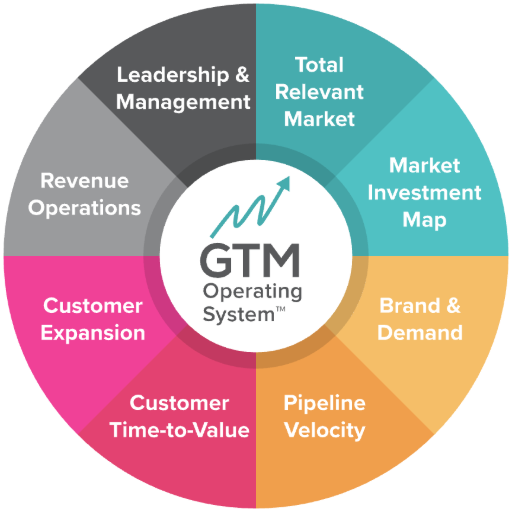
Ask of each repeating topic whether the outside market shares the problem, the third step in his sequence. He says to think total relevant market rather than total addressable, in GTM Partners’ terms the customers you can realistically reach, serve and win now. His example asks which logistics tools a trucking company built that other truckers need.
Last, calculate the marginal cost of offering each one outside. By then you know what you’ve already paid for, who else has the problem, and what offering it would cost, while walking away is still cheap.
Source: Meta’s stock jumped $130B in a day. They didn’t build a new product., Sangram Vajre, Run on GTM OS, 21 October 2026. GTM OS and its eight pillars are GTM Partners’ framework.

Downstream — the direction the water is already traveling. Just as a river carries everything downstream, this section points at the one thing worth doing before the next issue lands.
Three of these six come down to a file you already have: the quote dates, the won and lost deals in one application, the application engineering hours nobody invoiced. Pick the shortest list and do it before the next pipeline review. If you’d rather know which of the eight pillars is costing you most first, the assessment below ranks them.
Why run on an operating system
Eight pillars, one system, and each one builds on the next. More than 2,000 GTM teams have been assessed against it, and the assessment is the useful part: it tells you which pillar is actually holding you back, rather than the one making the most noise. Fix that pillar and the effect carries into the ones that follow. What your leadership team ends up with is one vocabulary and one set of numbers everyone has signed up for, which is what turns activity into growth you can plan around.
Curious what it would surface in your business? Take the assessment — it’s the fastest way to see which pillar is holding you back.
Start at mhflow.co — or forward this to the operator who needs it.
Get the next issue on LinkedIn. Chasing Flow publishes every other Tuesday. Subscribe on LinkedIn.
Working through one of these in your own business? See how Flow works with companies.
Chasing Flow is written by Michele Hodde. GTM OS and the eight-pillar operating system are trademarks of GTM Partners, licensed to Michele Hodde as a certified practitioner.