

Chasing Flow · Issue 04 · 13 October 2026
Six places where the deciding number sits on somebody else’s report.
Chasing Flow is written for owners of $5M to $50M companies that win work through a quote or a proposal, and whose business runs through them more than they'd like. Making the business worth more and less dependent on its owner is work that never quite ends, and each issue takes on one piece of it.
Hence the name. Flow is real and it’s achievable, and it doesn’t hold still: competitors move, the market moves, your own product mix moves, and the alignment that produced flow last year quietly stops producing it. So the pursuit is the permanent condition, not a project with an end date. Every other week this newsletter gives you ways to evaluate where your GTM is actually breaking and what to do about it — practical diagnostics, the numbers behind them, and a path back toward flow.

Headwaters — the streams at the source of a river, where it begins. Just as the headwaters set the course a river takes, this section states the one idea running through the issue.
Every diagnostic in this issue ends up in the same place. The number that decides the outcome sits on a report nobody in the deal can see.
A savings claim gets built against the unit it replaces, and the person who owns that budget line isn’t the one buying your equipment. The economic buyer signs off on the money and gets measured on first-pass yield or unplanned downtime, so your champion presents the case from memory because nobody handed them the number. The service team knows which customers bought eleven units and order consumables for four, and carries its own cost line, so none of it reaches sales. Three companies merge, each arrives with a different answer to who the customer is, and the first combined comp plan settles it.
The numbers themselves aren’t missing. They’re in an ERP, a service database, a plant manager’s scorecard, somebody’s diligence file. What’s missing is a person who can say whose number decides your deal, and that gap costs nothing until the week you need the answer.
In this issue
- 01 · Installed BaseDifferent products create different kinds of value, and the kind you can prove decides how contested every deal becomes.
- 02 · Installed BaseBefore a savings number goes in a deck, ask what it’s being divided by.
- 03 · Target CustomersI pulled the September ISM Manufacturing report.
- 04 · Getting SpecifiedEvery engineered-product sale has at least two buyers, and they don’t read the same thing.
- 05 · Installed BaseA customer bought eleven units. They’re ordering consumables for four.
- 06 · Revenue MetricsThree companies become one.

The current — the body of water in steady motion, and what’s moving through it now. Just as the current carries the volume of a river, this section carries the substance of the issue — the working ideas, in full.
Installed Base
Different products create different kinds of value, and the kind you can prove decides how contested every deal becomes.
When you plot win rate against the 5 types of ROI, you get a curve. The two strongest sit at opposite ends and the low point is in the middle.
Attributable is revenue that moves with what the customer spends. Transformational is the customer operating differently because of you. Both of these are you playing offense.
Efficiency and Necessity are defensive plays. You can lead a category from there and still spend every deal fighting on price, features and support.
Indirect is the bottom. Improves quality, better reliability. All true, none of it provable at the business level.
When I started marketing for one company, they were leading with efficiency. Lower consumable use per run, honestly quantified, real on every unit a customer replaced. It’s a cost line that may or may not sit in your equipment buyer’s budget, and competitors get to argue with it.
I went looking for what sat underneath it. The instrument was designed around a smaller footprint. That required capillary flow rates, and capillary flow rates use less solvent.
They were leading with the byproduct.
So I moved the story onto the size, and onto what the size made possible. The instrument on the manufacturing line. Inside hoods and glove boxes. In the field with farmers.
None of that is a more cost-efficient version of the old workflow. It’s work the customer couldn’t do before at all.
Same product, same specifications. Off defense and into offense on the other side of the curve.
Specifications are a good place for engineered products and industrial tech companies to look. Three examples:
- Power. A device running off the 24 VDC panel supply already at the machine gets installed on a Tuesday. One needing a new three-phase drop is a project somebody designs and schedules.
- Operating temperature and ingress rating. Wide enough, sealed enough, and your customer stops designing a conditioned enclosure around your product. Rated low enough and it runs in cold storage.
- Mass. Under the two-person limit and a retrofit inside existing steel gets quoted instead of abandoned at the site survey.
Transformational value only shows up if the customer changes how they work, so you’re asking for more than just a purchase order. It’s a longer sale but a stronger position to hold.
What’s hiding in your specifications that could put you on offense?
Installed Base
Before a savings number goes in a deck, ask what it’s being divided by.
The instrument in my post on the 5 types of ROI used less solvent on every run. Measured against the unit it replaced, that was a big number. Measured against what a plant consumes making the product, it rounded to nothing.
Same saving. Two denominators. The buyer picks which one.
Vendors tend to measure against the thing being displaced, because that’s the comparison that makes the case. Buyers measure against their own spend, because that’s the number on their report.
There’s a second question sitting underneath it. Whose line is that saving on?
At that company, the person who owned the solvent budget wasn’t the person buying instruments, and didn’t always care what we saved them.
So two questions to ask the customer before you build the case, not after.
What do you spend on this in total today?
And who watches that number?
If nobody in the deal can answer the second one, what you have is a feature with arithmetic attached. It will get nods in the room and go nowhere in the approval.
I ask for the denominator early now. It decides whether the rest of the case is worth building.
Target Customers · Revenue Metrics
I pulled the September ISM Manufacturing report.
The headline PMI came in at 54.5, a tenth below August’s 54.6. On the surface, nothing to see.
Then you open the sub-indexes. Backlog of Orders jumped 4.6 points to 56.4. Production fell 1.6 to 56.7. Prices rose 6.8 to 77.9.
Work is arriving faster than it’s being converted, and the respondent comments point at the supply side. A fabricated metal producer reports orders booked through year-end above forecast, with a severe worker shortage limiting output. A machinery producer reports delivery times doubling in its semiconductor, electronics and government business.
Twelve industries reported growth and two reported contraction. The growth list includes machinery, fabricated metal, electrical equipment and transportation equipment.
If your segment is on that list, demand generation isn’t your Q4 problem. Capacity is. The commercial question becomes which work you take rather than which work you win.
If nothing in your business decides that deliberately, it still gets decided. The slot goes to whoever called most recently, which is a segmentation decision being made by the phone.
Four things worth doing about it this month.
1) Rank the open order book by margin per week of whatever is scarce.
The machine cell, or the one operator qualified to run that job. Order size won’t tell you and neither will margin percent.
2) Write the acceptance rule down before the next order arrives.
What gets the slot when two jobs compete for it. A crude rule beats no rule, because no rule means recency wins.
3) Name who holds the pen.
Right now it’s whoever picks up the phone. It should be a person, or a standing weekly call between sales and operations.
4) Re-price what’s going out now.
Anything quoted this month for Q1 delivery needs current assumptions and a validity window on the quote.
That last one carries the price side of the report. Q3’s backlog was quoted under August conditions and you’ll convert it at the price you agreed then, so that margin is already decided. The quotes going out now are the ones that set Q1.
Getting Specified
Every engineered-product sale has at least two buyers, and they don’t read the same thing.
The technical evaluator decides whether you’re possible. They want test data, tolerance stackups, failure modes, and someone who’ll answer a hard question without routing it through sales. They’re usually your first contact, and they can only say no.
The economic buyer decides whether you’re worth it. They want payback period, risk, and what happens if this goes wrong. They appear late, they can say yes, and they’ve often never spoken to you.
Most of the companies I’ve worked with built almost entirely for the first one. The engineering team is genuinely good at technical support, so the technical case gets made well. The economic case gets made by your champion, alone, from whatever they can remember.
That’s where I’ve seen these deals get lost. Not on a spec. On a slide your champion built from memory.
Your champion will present your case whether you’ve prepared them or not.
Take the open deals where engineering is already satisfied and you’re waiting on a decision. For each one, ask the rep who signs off on the money and what that person gets measured on. A plant manager might carry cost per unit or unplanned downtime. A quality director carries first-pass yield. Knowing the title isn’t the same as knowing the number.
If nobody can answer the second half, then nothing in your deal connects what you sell to a number the economic buyer is judged on. Your champion has to make that connection themselves, on the spot.
What I’d build is one page, written for the economic buyer. Their number, where it sits today, and where it lands with your product in place. The assumption that gets you between the two, stated plainly enough to argue with. What happens if it underperforms and who absorbs that. One customer who’s already done it.
You’ll know it’s right when your champion forwards it without rewriting it.
Installed Base
A customer bought eleven units. They’re ordering consumables for four.
That gap is sitting in your service database right now, and it has at least three explanations. They point in opposite directions.
Seven units are idle or quietly decommissioned. That’s a utilization problem, and it’s the kind that turns into a smaller reorder.
Seven are running on somebody else’s consumables. You lost a competitive fight inside an account you think of as yours, and nobody wrote it down.
Or seven run an application that doesn’t use that consumable at all. Fine. And it tells you something about the account you didn’t know.
Three different conversations. You can’t tell which one you’re in until you ask.
Your service database holds the units sold and the consumables ordered against them, along with a lot more: serial numbers, install dates, field tickets, spare parts orders.
It also knows which units run hot and which sites call every month.
A site that calls every month is a bad install, a training gap, or an application the product was never right for. Two of those you can fix. The third is a product conversation. If your service team carries its own cost number, none of it reaches the sales team unless somebody walks it over.
So the fix isn’t to tell your sales team to find upsell opportunities. Instead, decide which customers are buying less than their installed base suggests, and what they should buy next. Then give that to someone as a number they own. The evidence is already in the building.
Go get a login.
Revenue Metrics · Target Customers
Three companies become one
A sponsor announced a three-way combination in medical device manufacturing. Banner Capital, bringing Seaway Plastics Engineering, MME Group and Wright Engineered Plastics together as one company. That’s their announcement, with closing expected this quarter.
Two of those three already share an owner. Seaway bought Wright at the end of 2020 and MME in 2022. They are still being sold as three companies.
An integration plan covers systems, facilities and reporting lines, because each of those has a boundary and an owner.
The commercial question is different. Each of the three arrived with its own answer to who the customer is, how it sells, and why anyone chose it. The combined company gets one answer to each, and nothing in the closing process decides which.
Left alone, it resolves by default. Whichever CRM survives the migration. Whichever sales leader wins the first ninety days. Whichever customer list happened to be cleanest when somebody had to merge them.
None of those is a segment decision, and every one of them makes one.
There’s a number worth having before the close, and diligence already produced it. Take the three customer lists and find the names that appear on more than one.
A high count means the same customers had already qualified more than one of these companies. In this business a customer qualifies a supplier before it places work, so one name on two lists means two of the three were competing for the same programs at the same buyer. That’s a single market, and what the deal bought is a larger position in it. The segment question is most of the way answered and the work ahead is cross-sell.
A low count means few customers had a reason to buy from more than one of them. Different buyers, different programs, different approval paths. Cross-sell in that case isn’t cross-sell. It’s earning a new qualification at an account one of your own companies already serves, and it costs roughly what winning a new customer costs. What the three actually share is a holding company. So the next commercial dollar funds one of those customer bases ahead of the others, and somebody picks.
Then how it sells. A company that grew on founder relationships sells differently from one that grew on engineering support, and differently again from one that grew through a rep network. Running all three is allowed. The question is how many distinct go-to-markets this company can plan, fund and operate at once, and who owns each one. What goes wrong is three motions nobody assigned, calling on the same accounts out of the same budget, sorted out later by whoever got there first.
Which is why the first combined comp plan matters more than the integration milestones. That document encodes which customers matter and which products get sold, and somebody writes it whether or not the segment question was ever answered.
The difference shows up later, when the growth plan has to produce the revenue it was underwritten on.

Tributary — a stream that rises elsewhere and joins the main channel. Just as a tributary adds to a river’s flow, this section takes outside go-to-market research and asks what changes for a physical product.
AI made the handoffs visible, and one of yours leaves the building
Writing in Run on GTM OS, Sangram Vajre makes the case that AI isn’t breaking marketing, sales or customer success. It’s exposing cracks those functions already had, and he calls the accumulation go-to-market debt. His examples are a marketing team producing ten times the content against flat pipeline, outbound booking more meetings with people further outside the ICP, and a support team cutting resolution time by forty percent while retention falls. The remedy he proposes is organizational: get the leadership team to one answer on who the customer is before buying another tool.
The mechanism survives the move to a physical product. What changes is which crack takes the load.
The functions AI speeds up first are content and outreach. The one that absorbs the result is application engineering, and that one doesn’t speed up by turning something on. More technical questions arriving faster lands on the same few people who already decide what gets quoted. A software company doubling its inbound is loading a function it can hire into.
Then the handoff itself. His worst case is sales to customer success, and both of those sit inside one company. The handoff that decides whether an engineered-product customer buys again runs from sales to application engineering to service, and somewhere along it the relationship is often held by a rep, a dealer or an integrator rather than by you. A bad handoff inside your building is a meeting. A bad handoff across a channel partner is something you hear about from an order that doesn’t arrive.
His warning about lagging indicators needs the same translation. There is no churn event to watch. The equivalents depend on how you sell, from a requote that goes elsewhere to a consumable order that steps down to a project you aren’t invited to bid, and they sit in an ERP and a service database rather than a CRM. Whether those two are joined in your business has a yes or no answer.
Before the next tool, I’d pick the handoff where the relationship leaves your building and find out what crosses it.
Source: AI Isn’t Breaking Marketing. Or Sales. Or CS. (The Real Answer Will Annoy You), Sangram Vajre, Run on GTM OS, 23 September 2026. GTM OS and the eight pillars are their framework.

Downstream — the direction the water is already traveling. Just as a river carries everything downstream, this section points at the one thing worth doing before the next issue lands.
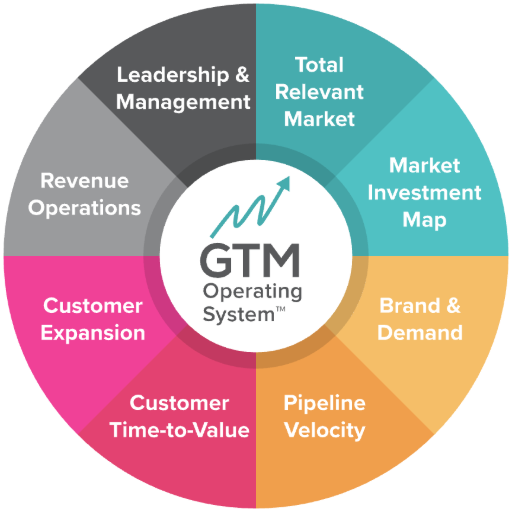
Six diagnostics, one shape: the number that decides each of them belongs to someone outside the conversation. If you want to know which of the eight pillars that pattern is costing you most, the assessment below puts them in order. It takes a few minutes.
Why run on an operating system
Eight pillars, one system, and each one builds on the next. More than 2,000 GTM teams have been assessed against it, and the assessment is the useful part: it tells you which pillar is actually holding you back, rather than the one making the most noise. Fix that pillar and the effect carries into the ones that follow. What your leadership team ends up with is one vocabulary and one set of numbers everyone has signed up for, which is what turns activity into growth you can plan around.
Curious what it would surface in your business? Take the assessment — it’s the fastest way to see which pillar is holding you back.
Start at mhflow.co — or forward this to the operator who needs it.
Get the next issue on LinkedIn. Chasing Flow publishes every other Tuesday. Subscribe on LinkedIn.
Working through one of these in your own business? See how Flow works with companies.
Chasing Flow is written by Michele Hodde. GTM OS and the eight-pillar operating system are trademarks of GTM Partners, licensed to Michele Hodde as a certified practitioner.